- Lavender (true) is the archetypal low-risk oil of aromatherapy. T&Y list no hazards and no contraindications (B216 p.659).
- Not phototoxic. One confirmed photoallergy case at 2% (Goiriz et al 2007) is the only photo-event; T&Y explicitly state "lavender oil is not phototoxic" (Opdyke 1976 p.451).
- Low sensitization rate in real-world dermatitis cohorts: 0/200 (Rudzki 1976), 0.9% (Veien 2004), 2.8% (Larsen 2002). Oxidation products of linalool are the known sensitizer — keep oil fresh + use antioxidants per IFRA 2009.
- No pregnancy or pediatric contraindication. Estrogenic in vitro (Henley 2007) but not in vivo (Politano 2013) — the "prepubertal gynecomastia" Henley claim is not supported by current toxicology. Defer to the general [[pregnancy_safety]] framework.
- Five regional chemotypes (Australian, Bulgarian, French, Moldovan, Ukrainian — Schmidt 2003). No safety difference between them. All are clonal selections of L. angustifolia subsp. angustifolia.
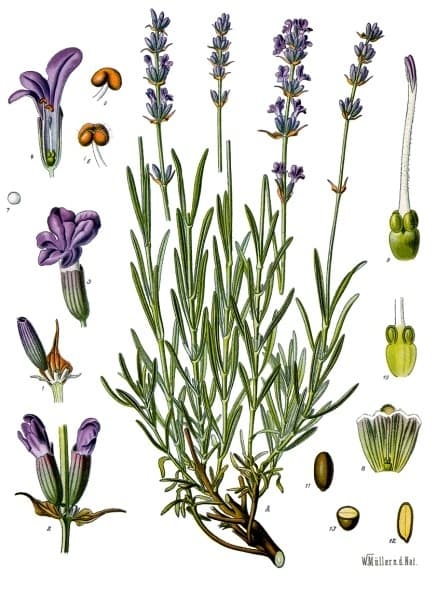
Tổng Quan
- Danh pháp khoa học
- Lavandula angustifolia Mill.
- Họ thực vật
- Lamiaceae (Labiatae)
- Bộ phận dùng
- Flowering tops
- Phương pháp chiết xuất
- Steam distillation
- Màu sắc
- Không màu đến vàng nhạt
- Phân loại nốt hương
- Nốt Top/Middle
- Hương thơm
- Top note dominant; Sắc nét mạnh mẽ — fenchone herbal-minty eucalyptus, camphor medicinal nồng, 1,8-cineole fresh, thoáng floral rất nhẹ từ bracts; KHÁC HOÀN TOÀN với L. angustifolia — không ngọt, không floral, không lavender truyền thống
- Chemotype / Cultivar
- Subspecies stoechas — chemotype fenchone/camphor dominant; biến động địa lý rất lớn: Morocco/Greece/Turkey: fenchone 31–55% + camphor 18–46%; Sardinia/Italy: fenchone 52–66% + camphor 13–27%; Algeria: fenchone + camphor + lavandulyl acetate; KHÔNG có linalool hay linalyl acetate đáng kể — hoàn toàn khác với L. angustifolia và L. × intermedia; đây là loài MỘT MÌNH một dòng trong chi Lavandula về chemistry
Các quốc gia sản xuất chính
Spain (Castilla-La Mancha, Murcia, Andalucía)MoroccoTurkeyGreeceSardinia (Italy)AlgeriaTunisiaPortugal
Tình trạng tại Việt Nam
⭐ — Cực kỳ hiếm tại VN; hầu như không có trên thị trường; một số cửa hàng aromatherapy chuyên biệt có thể order; giá ~300.000–600.000 VND/10ml nếu tìm được
Phân loại nốt
Top-Middle
Cường độ
3/5
Độ bền trên da
1–2 giờ (ketone và monoterpene bay hơi nhanh; không có ester lâu tan)
Họ hương
Floral-Herbaceous
Hương đầu (Opening)(0–15 phút)
fresh floral, clean herbaceous, soft sweet, powdery, faintly camphoraceous, calm
Hương giữa (Heart)(15–60 phút)
hoa khô, thảo mộc tươi, thanh mát, ngọt nhẹ, bột phấn, long não nhẹ
Hương nền (Drydown)(1–4 giờ)
1–2 giờ (ketone và monoterpene bay hơi nhanh; không có ester lâu tan)
Cường độ hương
3/5
Da khô
1/5
Fenchone + camphor làm khô cực mạnh; TRÁNH
Da dầu/mụn
2/5
Antimicrobial mạnh nhưng ketone gây kích ứng > lợi ích; tea tree an toàn hơn
Viêm da cơ địa
1/5
CHỐNG CHỈ ĐỊNH TUYỆT ĐỐI — fenchone + camphor phá vỡ barrier da
Da lão hóa
1/5
Không có lợi ích; ketone gây hại
Da nhạy cảm
1/5
CHỐNG CHỈ ĐỊNH — ketone cao gây kích ứng và sensitization mạnh
Da hỗn hợp
2/5
Chỉ vùng T; ≤0.5%; không để lâu
Nhập khẩuImported
Vùng trồng / sản xuất tại VN
Không có; L. stoechas là cây Địa Trung Hải, không thích hợp khí hậu VN
Tên gọi tại Việt Nam
Oải hương Tây Ban Nhaoải hương tai thỏ" (theo hình dạng bracts)một số nơi gọi nhầm là "French lavender" gây nhầm lẫn với L. angustifolia trồng ở Pháp
Trong Y học cổ truyền VN
Không có trong YHCT VN - Cây này chưa từng được biết đến hoặc dùng tại VN trước khi có internet/global trade
Mua hàng tại VN
Gần như không có trên thị trường VN phổ thông - Phải order từ nhà cung cấp quốc tế (Esperis Italy, Talia France, Morocco nhà cung cấp local) - Giá: ~300.000–600.000 VND/10ml nếu tìm được authentic source - Cảnh báo đặc biệt VN: Bất kỳ "lavender EO" nào tại VN có mùi camphor nồng + herbal sắc (không floral ngọt) + GC/MS cho thấy fenchone >15% → là L. stoechas — phải ghi nhãn đúng và cảnh báo người dùng
Pha Chế & Hòa Hợp
Antimicrobial / Antibacterial
Fenchone + camphor + 1,8-cineole + α-pinene; hoạt tính mạnh chống S. aureus, E. coli, P. aeruginosa, C. albicans; MIC thấp hơn nhiều EO khác trong họ Lamiaceae; fenchone đặc biệt hiệu quả chống Staphylococcus;
Ref: PMID 19731612, PMC10694050 (2023)
Wound Healing
Nghiên cứu động vật tiểu đường (PMID 37829966): L. stoechas tăng tốc lành vết thương ngày 7–21, tăng collagen, giảm phù nề, kích thích phát triển nang tóc và mô mỡ; antimicrobial phòng nhiễm trùng vết thương; (2023) pubmed.ncbi.nlm.nih
Antifungal
Fenchone ức chế Candida albicans và các nấm da mạnh; kết hợp camphor và cineole → synergistic antifungal;
Ref: PMC10694050
Expectorant / Mucolytic
1,8-Cineole (3.6–15.6%) + camphor + fenchone; kích thích mucociliary clearance mạnh; phù hợp viêm phế quản mãn tính, đờm dày; nguy cơ cao nếu dùng không đúng cách;
Ref: PMC10694050
Anti-inflammatory / Antioxidant
Fenchone ức chế COX-2 và TNF-α in vitro; β-caryophyllene CB2 agonist; viridiflorol anti-inflammatory;
Ref: PMC10694050, PMID 39641378
Anticonvulsant (nghịch lý
Fenchone ở liều cực thấp có tác dụng anticonvulsant (modulate GABA); nhưng ở liều cao → PRO-convulsant (ức chế GABA-A); đây là dualaction nguy hiểm — liều điều trị vs. liều độc gần nhau;
Ref: PMC10694050
PMID 37829966 (2023)
L. stoechas extract tăng tốc lành vết thương tiểu đường ngày 7, 14, 21; tăng collagen; giảm phù nề
Grade B — In vivo animal (diabetic model)PMID 37729996 (2023)
LSE 0.5–1% trong PLA nanofibrous dressing: antibacterial (E. coli, S. aureus), wound closure in vitro
Grade B — In vitro + materialsPMID 19731612 (2009)
Turkey L. stoechas ssp. stoechas GC/MS + antimicrobial: fenchone 41.9% (leaf), broad-spectrum MIC
Analytical + in vitroPMC10694050 (2023)
Comprehensive review fenchone/camphor từ L. stoechas: mechanisms antibacterial, anti-inflammatory, dual anticonvulsant/pro-convulsant
Grade B — Systematic reviewPMC7956842 (2021)
L. stoechas: camphor 16–56%, fenchone 15–49% → neurotoxic; xếp loại nguy hiểm thai kỳ
Safety review — Grade BPMID 39641378 (2025)
Comprehensive review L. stoechas (Ustukhuddus): antibacterial, anti-inflammatory, antioxidant, neuroprotective, dermatological
Grade B — Comprehensive reviewTâm trạng: Stimulating + Alerting (fenchone + camphor kích thích CNS ở liều thấp); KHÔNG calming như L. angustifolia — đây là điểm nhầm lẫn nguy hiểm nhất khi người dùng nghĩ "lavender là calming"
Tỉnh táo mạnh mẽkhai thông tinh thần u tốinăng lượng mạnh cần kiểm soátgiải phóng ức chếcảnh giác cao
Chakra
Throat Chakra + Third Eye (Ajna)
Ngũ hành
Metal
| Phương pháp | Liều lượng | Ghi chú |
|---|---|---|
| Diffusion (khuếch tán) | 1–2 drops tối đa | ≤15 phút, phòng THÔNG THOÁNG, không kín; fenchone + camphor tích lũy nồng độ cao trong không gian kín gây đau đầu, chóng mặt |
| Topical massage (massage) | ≤1% toàn thân / ≤2% cục bộ | Giới hạn nghiêm ngặt; chỉ nhóm người lớn khỏe mạnh; carrier trung tính (sweet almond); KHÔNG để da tiếp xúc lâu |
| Bath (tắm) | KHÔNG khuyến nghị | Fenchone + camphor hấp thu qua da tăng mạnh trong nước ấm; nồng độ trong máu tăng đột biến |
| Inhalation (hít) | 1 drop / khăn — ≤3 hít sâu | Short-term hỗ trợ hô hấp; KHÔNG kéo dài; KHÔNG steam bowl với trẻ em |
| Skincare (chăm sóc da) | KHÔNG khuyến nghị | Ketone 50–80% tổng quá cao cho da |
| Wound / Antiseptic (ngoài da) | ≤1% trong gel/cream rinse-off | Ứng dụng duy nhất có cơ sở clinical; kết hợp aloe vera gel |
Dầu nền phù hợp
Sweet AlmondTrung tính, không tăng hấp thu; giảm irritation từ fenchone + camphor; tốt nhất cho topical
Aloe Vera GelTốt nhất cho wound care — soothing + phân tán EO đều; kết hợp tốt với dữ liệu PMID 37829966
Kết hợp tốt với
EucalyptusCamphor-familyMedicinal herbsRosemaryPeppermint**KHÔNG phù hợp floral hoặc sweet blends
Blend kinh điển
Eucalyptus globulus + L. stoechas— Respiratory/decongestant blend mạnh nhất có thể tạo từ tự nhiên — cineole kép + fenchone + camphor; KHÔNG dùng trẻ em và phụ nữ có thai
Rosemary CT camphor + L. stoechas— Muscle liniment mạnh; counter-irritant cực mạnh; giới hạn cục bộ, rửa tay sau dùng
Peppermint + L. stoechas— Cold/flu inhaler — menthol + fenchone + camphor; inhalation only; ngắn hạn
Tea Tree + L. stoechas— Antifungal foot spray; broad-spectrum antimicrobial; rinse-off hoặc spray không để da tiếp xúc lâu
Cedarwood + L. stoechas— Làm dịu fenchone/camphor bằng woody; có thể dùng diffusion trong phòng lớn, thoáng
[Primary safety] Tisserand R & Young R — Essential Oil Safety 2nd ed. p.672–674 (Lavandula stoechas)
[Neurotoxicity / Pregnancy] PMC7956842 — Maternal Reproductive Toxicity of Some Essential Oils (2021); camphor 16–56%, fenchone 15–49%
[Fenchone/camphor mechanisms] PMC10694050 — Fenchone and camphor: Main natural compounds from L. stoechas (2023, 34 citations)
[GC/MS — Turkey ssp. stoechas] PMID 19731612 — Kirmizibekmez H et al. (2009) Chemical Composition and Antimicrobial Activity of L. stoechas ssp. stoechas, Turkey
[GC/MS — Alan 2009] Alan S et al. (2009) AJTCAM — Camphor 45.8%, α-fenchone 31.8%; 97.4% identified
[Wound healing] PMID 37829966 (2023) — Effect of L. stoechas on Wound Healing in Diabetic Model
[Wound dressing nanofibrous] PMID 37729996 (2023) — LSE-PLA nanofibrous mats antibacterial and wound closure
[Comprehensive review] PMID 39641378 (2025) — Comprehensive Review of L. stoechas (Ustukhuddus)
[Frontiers Chemistry 2024] DOI: 10.3389/fchem.2024.1353385 — Comparative composition L. stoechas
[VN market context] Observation thị trường VN; không có VN-specific data
[Data reliability] HIGH (chemistry, safety) / MODERATE (therapeutic wound healing — animal data; antimicrobial in vitro)
An Toàn
Giới hạn da tối đa
0.3%
Giới hạn IFRA
Fenchone bị kiểm soát trong IFRA vì neurotoxicity; camphor có giới hạn riêng; cần kiểm tra IFRA 51 Standards theo từng application category
Thai kỳ & Cho con bú
Tam cá nguyệt 1Avoid
Tam cá nguyệt 2Avoid
Tam cá nguyệt 3Avoid
Giới hạn độ tuổi
Xem chi tiết
- x *Dermal limits:**
- x **Max dermal % (Tisserand & Young p.672–674):** **≤1.0% toàn thân** (người lớn khỏe mạnh) — dựa trên fenchone ≤10% trong blend cuối + camphor ≤5%
- x **IFRA restriction:** Fenchone bị kiểm soát trong IFRA vì neurotoxicity; camphor có giới hạn riêng; cần kiểm tra IFRA 51 Standards theo từng application category
- x *Pregnancy & Breastfeeding (Thai kỳ):**
- x T1 (tam cá nguyệt 1): **AVOID HOÀN TOÀN** — fenchone + camphor cross placental barrier, gây neurotoxicity thai nhi
- x T2: **AVOID HOÀN TOÀN**
- x T3: **AVOID HOÀN TOÀN**
- x *Age Restrictions (Giới hạn tuổi):**
- x **Trẻ < 10 tuổi: CHỐNG CHỈ ĐỊNH hoàn toàn** — tất cả đường dùng (topical, inhalation, diffusion gần)
- x **Trẻ 10–14 tuổi:** CAUTION; chỉ diffusion phòng lớn thoáng ≤5 phút; không topical
- x **Người cao tuổi / Động kinh:** TRÁNH hoàn toàn
- x **Người lớn khỏe mạnh:** Dùng thận trọng theo giới hạn đã nêu
- x *Drug Interactions (Tương tác thuốc):**
- x **Anticonvulsants (phenytoin, valproate, carbamazepine):** Fenchone + camphor đối kháng — nguy cơ breakthrough seizure; **CHỐNG CHỈ ĐỊNH**
- x **CNS stimulants (amphetamine, modafinil):** Cộng hưởng stimulant CNS; tránh
- x **Thuốc an thần / Benzodiazepine:** Camphor đối kháng GABA-A; giảm hiệu quả thuốc
- x **Anticoagulants:** Không có data đặc hiệu; thận trọng do camphor
- x *Contraindications (Chống chỉ định):**
- x Thai kỳ và cho con bú — TUYỆT ĐỐI
- x Trẻ < 10 tuổi — TUYỆT ĐỐI
- x Động kinh / seizure disorder — TUYỆT ĐỐI
- x Sốt cao (camphor tăng nhiệt độ)
- x Bệnh gan nặng (fenchone chuyển hóa qua gan)
- x Da tổn thương, viêm, eczema
- x Không uống nội dùng bất kỳ liều nào
- x *Quality markers (Kiểm tra chất lượng):**
- x **Adulteration risks:** Pha camphor synthetic để tăng tỷ lệ; nhầm với *L. stoechas* ssp. *pedunculata* (profile khác); bán nhầm thành "lavender" hoặc lavandin
- x **Rủi ro nhầm lẫn VN:** Người bán thiếu kiến thức có thể bán *L. stoechas* như "lavender thật" vì cùng tên "lavender" — **GC/MS bắt buộc; linalool absent = L. stoechas**
- x **Storage:** Tối, mát <20°C; shelf life 2–3 năm; fenchone và camphor tương đối ổn định
Genuine: GC/MS xác nhận fenchone 15–66% + camphor 16–56% + 1,8-cineole 3–16%; linalool <2% (absent); linalyl acetate absent — nếu thấy linalool hoặc linalyl acetate cao → không phải L. stoechas ssp. stoechas Adulteration risks: Pha camphor synthetic để tăng tỷ lệ; nhầm với L. stoechas ssp. pedunculata (profile khác); bán nhầm thành "lavender" hoặc lavandin Rủi ro nhầm lẫn VN: Người bán thiếu kiến thức có thể bán L. stoechas như "lavender thật" vì cùng tên "lavender" — GC/MS bắt buộc; linalool ab
Bảo quản
Tối, mát <20°C; shelf life 2–3 năm; fenchone và camphor tương đối ổn định