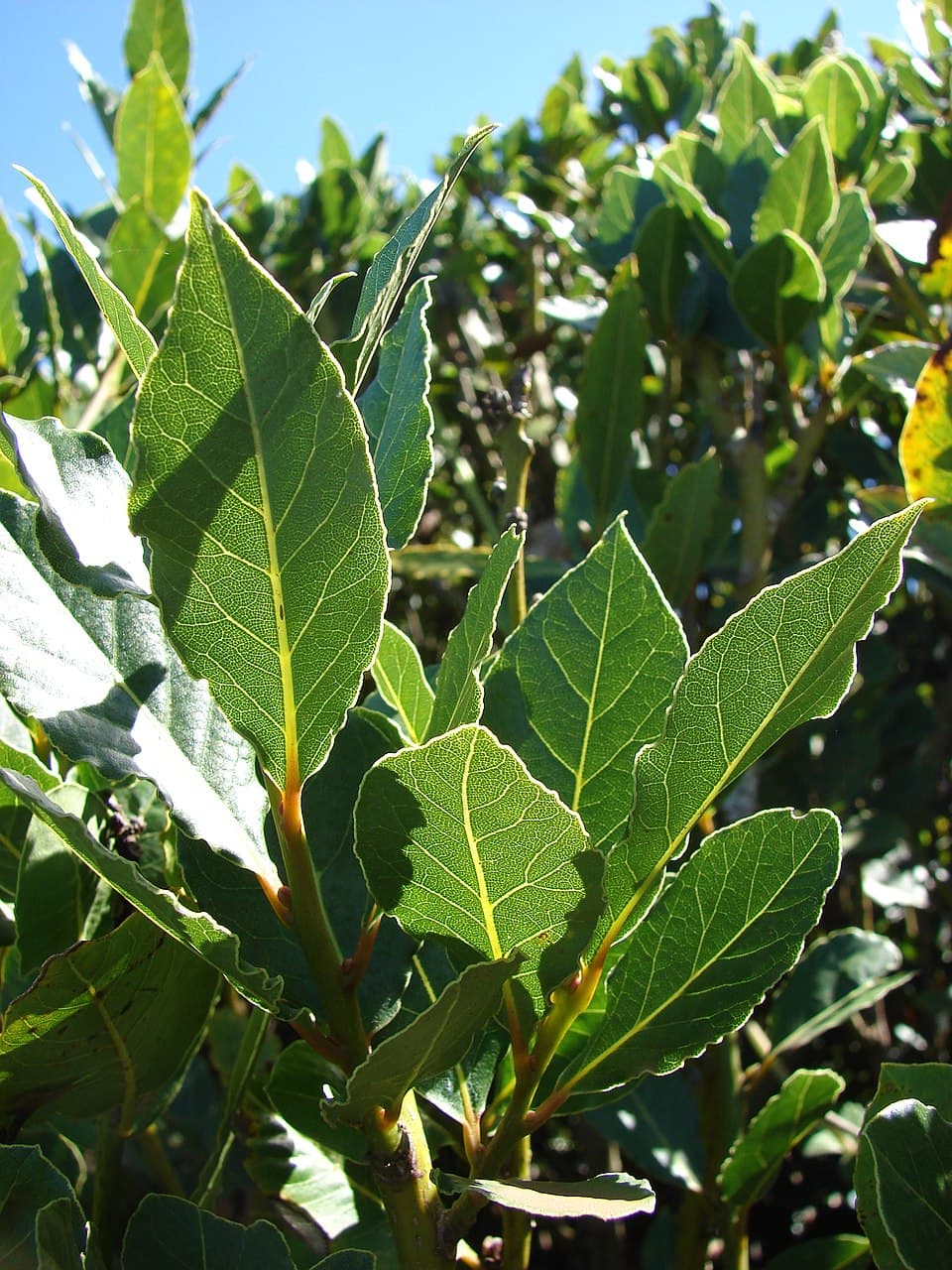
- Laurus nobilis L. (Lauraceae), leaves, steam distillation. "Laurel leaf / Bay laurel / Sweet bay / Nguyệt quế / True laurel / Noble laurel". CRITICAL name-trap cluster: "Bay leaf oil" and "Laurel oil" are AMBIGUOUS — may mean L. nobilis leaves (this page), Pimenta dioica leaves (Pimenta dioica-leaf "bay"), Pimenta racemosa leaves (West Indian bay / "bay rum"), Cinnamomum cecidodaphne fruits (Indian bay), or L. nobilis FRUITS (laurel berry — different product, contains costunolide + dehydrocostus lactone, EU-prohibited cosmetic ingredient).
- Chemistry = 1,8-cineole 38.1–43.5% + α-pinene 7.1–15.9% + α-terpinyl acetate 4.5–7.0% + linalool 6.2–6.5% + methyleugenol 1.4–3.8% + eugenol 1.2–3.0% (Lawrence 1995a p.51–52). Dual-driver dermal cap: methyleugenol up to 3.8% is the binding constituent (IFRA/EU methyleugenol 0.0004–0.01% leave-on → T&Y back-calculates to 0.5% oil when methyleugenol at 3.8%). 1,8-cineole 38.1–43.5% is the infant-face CI driver.
- Hazards: Methyleugenol carcinogen-class (dose-dependent) + cineole CNS/breathing problems young children + skin sensitization (low) + mucous irritation (low). Contraindications: "Do not apply to or near the face of infants or children" (cineole). Dual-driver dermal caps: EU 0.005% / IFRA 0.01% (methyleugenol stringent) / T&Y 0.5% (methyleugenol 3.8% × 0.02% cap). Max adult oral 18 mg/day — very restrictive.
- Sensitization + cross-sensitization rail: Meneghini 1971 — 48h occlusive 50 volunteers no reaction + 1%/380 eczema patients no reaction (low baseline). Opdyke 1976 p.337–338 — 2% non-irritating + non-phototoxic. BUT Adisen 2007, Athanasiadis 2007, Foussereau 1963/1967a/b/1975, Özden 2001 — multiple case reports of occupational + aromatherapist contact dermatitis. Uter 2010 IVDK 62/6,297 (0.98%) positive at 2%. Costus cross-sensitization: laurel leaf 10% elicited 6/6 reactions in costus-sensitized patients → CI for costus-sensitized + Asteraceae-sensitized individuals.
- Laurel berry is a DIFFERENT product and is EU-prohibited. Bouhlal 1988b reported laurel ABSOLUTE (solvent-extracted) phototoxic at 10% — the essential oil (distilled leaf) is NOT phototoxic, but absolute is a distinct product. Do not conflate EO with absolute with berry oil. Oral LD50 rat 3.95 g/kg.
Tổng Quan
- Danh pháp khoa học
- Laurus nobilis L.
- Họ thực vật
- Lauraceae
- Bộ phận dùng
- Lá khô (dried leaves) — thu hái mùa xuân đến đầu mùa hè
- Phương pháp chiết xuất
- Steam distillation (chưng cất hơi nước); Hydrodistillation trong nghiên cứu
- Màu sắc
- Pale yellow to yellow, mobile liquid nhrorganicoils_SDS.pdf)
- Phân loại nốt hương
- Nốt Middle
- Hương thơm
- Middle-Base note; warm, spicy-herbal, camphoraceous, slightly sweet, complex
- Chemotype / Cultivar
- Không có chemotype chính thức cố định — thành phần biến động rõ theo vùng địa lý và độ cao; 1,8-Cineole dominant (31–44%) trong mọi mẫu; Methyl eugenol dao động 4–15% là biến số đáng chú ý nhất (quan trọng về toxicity); Linalool CT ở một số vùng (>10%). Variation không đủ nhất quán để xác lập CT riêng biệt
Các quốc gia sản xuất chính
Thổ Nhĩ KỳMoroccoTunisiaGreeceItalyFormer Yugoslavia
Tình trạng tại Việt Nam
⭐⭐ — Cây nguyệt quế (L. nobilis) được trồng tại VN (miền Nam) chủ yếu để làm cảnh và gia vị; tinh dầu nhập khẩu, hiếm, giá cao; thường bị nhầm với "nguyệt quới" (Murraya paniculata) — hoàn toàn khác loài
Phân loại nốt
Middle
Cường độ
7/5
Độ bền trên da
3 – 8 hours (terpinyl acetate + eugenol + sesquiterpenes kéo dài dry-down tốt)
Họ hương
Camphoraceous
Hương đầu (Opening)(0–15 phút)
warm, herbal-spicy, camphoraceous, medicinal, slightly woody
Hương giữa (Heart)(15–60 phút)
thảo mộc ấm áp, the nhẹ, gia vị, gỗ dịu
Hương nền (Drydown)(1–4 giờ)
3 – 8 hours (terpinyl acetate + eugenol + sesquiterpenes kéo dài dry-down tốt)
Cường độ hương
7/5
Da khô
2/5
Eugenol + 1,8-cineole có thể kích ứng da khô; cần carrier nourishing đặc; ≤0.5%
Da dầu/mụn
4/5
Antibacterial mạnh (1,8-cineole + eugenol); astringent nhẹ; ≤1% toner
Da lão hóa
3/5
Anti-inflammatory có lợi; nhưng eugenol risk tăng ở da mỏng; ≤0.5%; blend thận trọng
Da thường
4/5
Antibacterial + anti-inflammatory tốt; serum/toner ≤1%
Da nhạy cảm
2/5
Eugenol là sensitizer Class 1; patch test bắt buộc 48h; max 0.5%; tránh mặt
Da hỗn hợp
3/5
Phù hợp vùng T; tránh vùng má khô; ≤0.5–1%
Sản xuất tại VNTier 3 Emerging
Vùng trồng / sản xuất tại VN
Miền Nam VN — TP.HCM, Bình Dương, Đồng Nai (trồng cảnh); một số tỉnh miền Trung và Tây Nguyên
Tên gọi tại Việt Nam
Nguyệt quế (tên chính thức)lá baylá nguyệt quế (trong ẩm thực nhập khẩu)
Trong Y học cổ truyền VN
Quả nguyệt quế (L. nobilis) dùng trong dân gian VN: điều kinh, tiêu chảy, bạch đới, phù thũng; lá dùng gia vị nấu ăn (thịt hầm, súp); dầu từ lá dùng xoa bóp tại chỗ kích thích. Hoa dùng trị xương khớp và co thắt dạ dày ở một số địa phương. ⚠️ Lưu ý: Tại VN, tên "nguyệt quới" (Murraya paniculata — họ Rutaceae) thường bị nhầm với "nguyệt quế" (L. nobilis — họ Lauraceae) — đây là 2 loài hoàn toàn khác nhau
Mua hàng tại VN
Tinh dầu lá bay thuần chất (L. nobilis) hầu hết là nhập khẩu từ Thổ Nhĩ Kỳ, Morocco, hoặc EU. Giá tham khảo: 150,000–500,000 VNĐ/10ml tùy xuất xứ và độ tinh khiết. Hiếm gặp và ít phổ biến hơn các EO thông thường tại VN.
Pha Chế & Hòa Hợp
antimicrobial (broad-spectrum)
1,8-cineole (≈35–50%) disrupts bacterial cell membrane integrity; eugenol inhibits enzymatic activity in Gram+ and Gram− pathogens.
Ref: Tisserand & Young 2014, Ch.13 p.650–654; class-extrapolation from 1,8-cineole dominant oils (eucalyptus, rosemary)
expectorant / mucolytic
1,8-cineole promotes ciliary motility and stimulates airway mucus clearance, reducing viscosity of bronchial secretions.
Ref: class-extrapolation from 1,8-cineole dominant oils (eucalyptus globulus, rosemary); Tisserand & Young 2014, Ch.13
analgesic / anti-neuralgic
Eugenol acts on TRPA1 channels and inhibits prostaglandin synthesis; linalool modulates GABA-A signalling to raise pain threshold.
Ref: Tisserand & Young 2014, Ch.13 p.650–654; class-extrapolation from eugenol-bearing oils (clove)
anti-inflammatory
Linalool and α-terpinyl acetate suppress NF-κB-mediated cytokine release; 1,8-cineole inhibits TNF-α and IL-1β at moderate concentrations.
Ref: class-extrapolation from 1,8-cineole class; Tisserand & Young 2014, Ch.13
antifungal
Eugenol disrupts fungal cell-wall ergosterol synthesis; phenolic fraction demonstrates MIC activity against Candida spp. in vitro.
Ref: class-extrapolation from eugenol-bearing oils; Tisserand & Young 2014, Ch.13
immunostimulant
1,8-cineole enhances macrophage phagocytic activity and upregulates innate immune response markers in cineole-class EO research.
Ref: class-extrapolation from 1,8-cineole dominant oils; Tisserand & Young 2014, Ch.13
Sayyah et al. 2003 (cited nhathuoclongchau.com)
Tinh dầu L. nobilis — hoạt tính giảm đau và chống viêm ở chuột và chuột cống
Animal ControlledFantasma et al. 2024 — PMC11276180 PMID: 39063366 pmc.ncbi.nlm.nih
7 batches wild EO ức chế enzyme sEH — IC₅₀ 16.5–8062 mg/mL; anti-inflammatory mechanism
In vitro / In silicoBilen & Bulut 2010 (cited nhathuoclongchau.com)
1,8-Cineole, α-pinene, β-pinene ức chế SARS-CoV và HSV-1 replication in vitro
In vitroDerwich et al. 2009 (cited nhathuoclongchau.com)
1,8-Cineole chịu trách nhiệm chính cho antibacterial activity của L. nobilis EO
In vitroTâm trạng: Stimulating, Uplifting
confidenceclarityachievementmental fortitudeinspiration
Chakra
Solar Plexus (Manipura)
Ngũ hành
Metal
| Phương pháp | Liều lượng | Ghi chú |
|---|---|---|
| Diffusion (khuếch tán) | 3–4 drops / 100ml nước | 20–40 phút; phòng làm việc, phòng tập; blend với eucalyptus và rosemary |
| Topical massage | 1–2% dilution | ⚠️ Giữ đúng dilution do eugenol + methyl eugenol; jojoba hoặc sweet almond |
| Bath (tắm) | 4–6 drops pha trong 2 tsp carrier | Pha với sweet almond; giảm đau cơ, respiratory benefit |
| Inhalation (hít) | 1–2 drops trên khăn / inhaler | 3–5 phút; respiratory, focus; xông mặt 1 drop |
| Skincare (chăm sóc da) | 0.5–1% trong serum/lotion | Non-comedogenic; antibacterial toner; KHÔNG dùng mặt >1% do eugenol |
Dầu nền phù hợp
JojobaOxidation-resistant liquid wax; stable at low 0.5% dilution. Neutral odour preserves the herbal-spicy EO profile. Non-comedogenic; suits adult combination/oily skin.
Sweet almond oilLight texture, mild odour, widely available. Suits full-body massage blends at 0.5% dilution; oleic acid base enhances absorption for muscle applications.
Fractionated coconut oilOdourless, highly stable; ideal where blend shelf life matters given the phenolic constituents. Promotes dermal penetration for topical antimicrobial use.
Rosehip seed oilRich in linoleic acid; supports anti-inflammatory skin repair in adults at max 0.5%. Do not use on sensitive or reactive skin given concurrent sensitization risk.
Kết hợp tốt với
CamphoraceousSpicyHerbaceousWoodyResinous
Blend kinh điển
Eucalyptus + Laurel— double cineole synergy amplified; respiratory + antibacterial powerhouse cho chest rub và inhaler blend
Rosemary + Laurel— both Mediterranean aromatic herbs; focus + respiratory + muscle blend; thường gặp trong xông sauna châu Âu
Clary Sage + Laurel— warm herbal-spicy; hormonal support blend, muscle tension, meditative diffuser
Black Pepper + Laurel— spicy-warm-camphoraceous; circulation, joint pain, masculine fragrance base
[Primary safety] Tisserand & Young, Essential Oil Safety 2nd Ed. — Bay Laurel / Eugenol sections [CITATION-NEEDED exact page]
[Chemistry / GC-MS] Fantasma et al. 2024 — PMC11276180 PMID: 39063366 — https://pmc.ncbi.nlm.nih.gov/articles/PMC11276180/ pmc.ncbi.nlm.nih
[Chemistry / PMC review] PMC6152719 (2017) — Laurus nobilis EO composition & biological activities — https://pmc.ncbi.nlm.nih.gov/articles/PMC6152719/ pmc.ncbi.nlm.nih
[SDS / Composition] NHR Organic Oils SDS — https://www.nhrorganicoils.com/uploads/20170619123658e_Laurel_Leaf_(Bay)_SDS.pdf nhrorganicoils_SDS.pdf)
[Madar COA] Madar Corp — Laurel Leaf Organic — https://www.madarcorporation.com/spec-sheets/essential-oils-organic/laurel-leaf-bay-laurel/ madarcorporation
[INCI / CAS] SpecialChem CosIng — https://www.specialchem.com/cosmetics/inci-ingredients/laurus-nobilis-oil specialchem
[IFRA Eugenol] IFRA Standard 49th Amendment — Eugenol restriction — https://www.perfumersworld.com/documents/Project-Templates/IFRA-Standards/Eugenol.pdf perfumersworld
[Methyl Eugenol / EFSA] EFSA 2023 — Feed additive Laurel oil — https://efsa.onlinelibrary.wiley.com/doi/10.2903/j.efsa.2023.7875 efsa.onlinelibrary.wiley
[Dermal limits] Craft360 EO Safety Guide — https://www.craft360.com.au/blogs/news/essential-oil-safety-and-dermal-limits-a-beginners-guide-for-skincare-formulators-v2 craft360.com
[VN Context] Tra cứu dược liệu VN — https://tracuuduoclieu.vn/laurus-nobilis-l.html tracuuduoclieu
[VN Context 2] Long Châu Pharmacy — Nguyệt quế — https://nhathuoclongchau.com.vn/thanh-phan/nguyet-que nhathuoclongchau.com
[VN Context 3] Trung tâm thuốc — Cây nguyệt quế — https://trungtamthuoc.com/duoc-lieu/cay-nguyet-que trungtamthuoc
[Data reliability] HIGH — GC/MS từ peer-reviewed PMC (PMID thật, 2024); SDS từ NHR; CAS/INCI từ EFSA/SpecialChem chính thức; IFRA từ Perfumers World certificate; VN data từ 3 nguồn dược liệu VN thực; Methyl Eugenol concern từ EFSA regulatory review
An Toàn
Giới hạn da tối đa
2%
Giới hạn IFRA
Yes — restricted via Eugenol (constituent QRA)
Thai kỳ & Cho con bú
Tam cá nguyệt 1AVOID
Tam cá nguyệt 2AVOID
Tam cá nguyệt 3AVOID
Giới hạn độ tuổi
AVOID
- GC/MS authentic: 1,8-Cineole >30% là bắt buộc; α-terpinyl acetate 8–13%; đồng thời phải có sabinene, linalool, và cả eugenol + methyl eugenol - Methyl Eugenol report từ supplier bắt buộc — giá trị 4–15% là natural range; cần xác nhận để assess genotoxic exposure - Optical rotation thường dương (+) → phân biệt với eucalyptus (rotation âm hơn) nhrorganicoils_SDS.pdf) - Adulteration bằng eucalyptus: cineole cao nhưng thiếu terpinyl acetate và phenylpropanoids đặc trưng Source: Tisserand & Youn
Bảo quản
Bảo quản nơi tối, mát