- Syzygium aromaticum (L.) Merrill et L.M. Perry. Myrtaceae, stems (NOT bud, NOT leaf), steam distillation. Eugenol 76.4–84.8% — same species as clove-bud + clove-leaf. Non-phototoxic. Odor distinct per T&Y Comments (stem = woody undertone vs bud = rounded vs leaf = harsher medicinal). Clove bud is most-used type; clove stem = cheap by-product of clove bud harvest.
- Hazards: Drug interaction + Anticoagulant + Embryotoxicity + Skin sensitization (moderate) + Mucous membrane irritation (moderate). Same hazard set as clove leaf (no "may contain methyleugenol" for stem). Cautions oral: pethidine, MAOIs, SSRIs; anticoagulant meds, major surgery, peptic ulcer, hemophilia. Cautions dermal: hypersensitive/damaged skin, children <2y AVOID.
- Chemistry (Lawrence 1993 p.36, 1995g p.178, p.198): eugenol 76.4–84.8% + β-caryophyllene 3.5–12.4% + eugenyl acetate 0.4–8.0% + α-caryophyllene 1.0–1.5% + isoeugenol 0.1–0.4%.
- Max dermal: 0.6% (per T&Y based on 84.8% eugenol × 0.5% eugenol IFRA ≈ 0.59 ≈ 0.6%). Same cap as clove leaf.
- Opdyke 1975 p.765–767: undiluted stem = moderate rabbit erythema/edema + severely mice-irritating; 10%/25 volunteers not irritating/not sensitizing (higher tolerance than bud 5% — reflect narrower eugenol range 76.4–84.8% vs bud's up-to-96.9%). Anticarcinogenic (shared clove block).
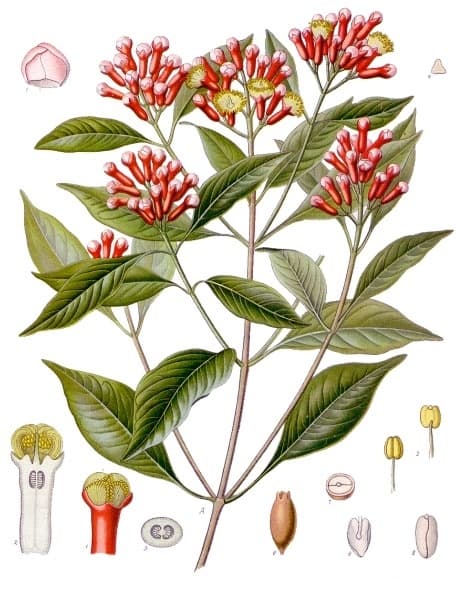
Tổng Quan
- Danh pháp khoa học
- Syzygium aromaticum (L.) Merrill et L.M. Perry
- Họ thực vật
- Myrtaceae
- Bộ phận dùng
- Stems / Peduncles (Cành non, cuống nụ hoa)
- Phương pháp chiết xuất
- Steam distillation
- Màu sắc
- Pale yellow to brownish-yellow
- Phân loại nốt hương
- Nốt Middle/Base
- Hương thơm
- Middle to Base note; Strong, spicy, woody, slightly sweet but harsher than bud oil.
- Chemotype / Cultivar
- Eugenol CT
Các quốc gia sản xuất chính
MadagascarIndonesiaZanzibar.
Tình trạng tại Việt Nam
★★☆☆☆ [Rarely sold distinctly in retail; often blended or used as an adulterant]
Phân loại nốt
Middle/Base
Cường độ
8/5
Độ bền trên da
2 – 10 hours
Họ hương
Spicy
Hương đầu (Opening)(0–15 phút)
Spicy, woody, pungent, warm.
Hương giữa (Heart)(15–60 phút)
Mùi hương gia vị ấm nồng, mùi gỗ tẩm gia vị, thô hơn nụ đinh hương nhưng đỡ hắc và khét hơn lá đinh hương.
Hương nền (Drydown)(1–4 giờ)
2 – 10 hours
Cường độ hương
8/5
Da khô
1/5
Avoid.
Da dầu/mụn
1/5
Avoid.
Da lão hóa
1/5
Avoid.
Da nhạy cảm
1/5
strictly avoid.
Da hỗn hợp
1/5
Avoid.
Nhập khẩu** Imported
Vùng trồng / sản xuất tại VN
N/A (Mainly imported from Madagascar or Indonesia).
Tên gọi tại Việt Nam
Tinh dầu cành đinh hươngtinh dầu cuống đinh hương.
Trong Y học cổ truyền VN
Hầu như không được phân loại và bán lẻ dưới tư cách trị liệu y học cổ truyền. Cuống/cành đinh hương thường là phế phẩm của quá trình thu hoạch nụ, được các nhà máy gom lại chưng cất lấy eugenol thô.
Mua hàng tại VN
Rất hiếm thấy bán lẻ với nhãn mác "Clove Stem". Đa phần bị trộn lẫn và bán dưới tên "Tinh dầu đinh hương" giá rẻ để cạnh tranh. Người tiêu dùng mua lẻ gần như không thể xác định được sự khác biệt nếu không có GC/MS.
Pha Chế & Hòa Hợp
Antimicrobial / Antifungal
Extremely potent due to the very high concentration of eugenol (>80%);
Ref: PMID 38671935
Analgesic & Local Anesthetic
Strong numbing effect for dental pain, though less refined than Clove Bud;
Ref: PMID 26333873
Anti-inflammatory
Reduces inflammation and swelling when used in highly diluted topical applications.
PMID 38671935
Significant broad-spectrum antimicrobial activity against various pathogens (Eugenol-rich extracts).
In vitroPMID 26333873
Eugenol exhibited significant antinociceptive and anti-inflammatory effects in animal models.
In vivo (Mice)Tâm trạng: ** Stimulating
Warmingstimulating.
Chakra
** Root (Muladhara)
Ngũ hành
Fire
| Phương pháp | Liều lượng | Ghi chú |
|---|---|---|
| Diffusion (khuếch tán) | 1 drop | Only in blends. High mucosal irritation risk. |
| Topical massage (massage) | Max 0.5% | Heavily dilute for warming muscle rubs. Clove Bud is preferred. |
| Bath (tắm) | NOT REC. | Do not use in baths. Severe sensitization risk. |
| Inhalation (hít) | NOT REC. | Too pungent for direct inhalation. |
| Skincare (chăm sóc da) | AVOID | Never use on the face or sensitive skin. |
Dầu nền phù hợp
Fractionated coconut oilOdourless and indefinitely stable; ideal for precision small-batch blending at the strict 0.6% maximum without competing fragrance notes.
JojobaWax ester mimic of skin sebum with excellent shelf life; supports precise low-concentration formulations and minimises sensitisation risk via a neutral, well-tolerated base.
Sweet almond oilMild and emollient; softens the warming intensity of clove stem and provides comfortable skin feel for targeted muscle or joint application blends.
Sunflower oilHigh linoleic acid content supports skin barrier function; lightweight and widely accessible for diluting clove stem to its strict adult dermal limit.
Kết hợp tốt với
SpiceWoodCitrus.
Blend kinh điển
—
—
—
—
[Primary safety] Essential Oil Safety (2nd Ed) - Tisserand & Young (p. 254-255 derived from eugenol caps)
[Clinical] PMID: 38671935, PMID: 26333873
[Chemistry] GC/MS profiles via CIRAD & SCIRP analyses for Syzygium aromaticum stems
[VN Heritage] Khảo sát thực tế chuỗi cung ứng hương liệu VN
An Toàn
Giới hạn da tối đa
Xem chi tiết
Giới hạn IFRA
** Restricted due to high eugenol content.
Thai kỳ & Cho con bú
Tam cá nguyệt 1Unknown
Tam cá nguyệt 2Unknown
Tam cá nguyệt 3Unknown
Giới hạn độ tuổi
Xem chi tiết
Genuine: Should have a woody-spicy scent, lacking the sweet top notes of the bud. Adulteration risks: Clove stem is frequently used to adulterate the much more expensive Clove Bud essential oil. Storage: Dark, airtight container to prevent oxidation of eugenol into more sensitizing compounds.
Bảo quản
Dark, airtight container to prevent oxidation of eugenol into more sensitizing compounds.